
Blog
Dental hygiene tips for healthy teeth & gums
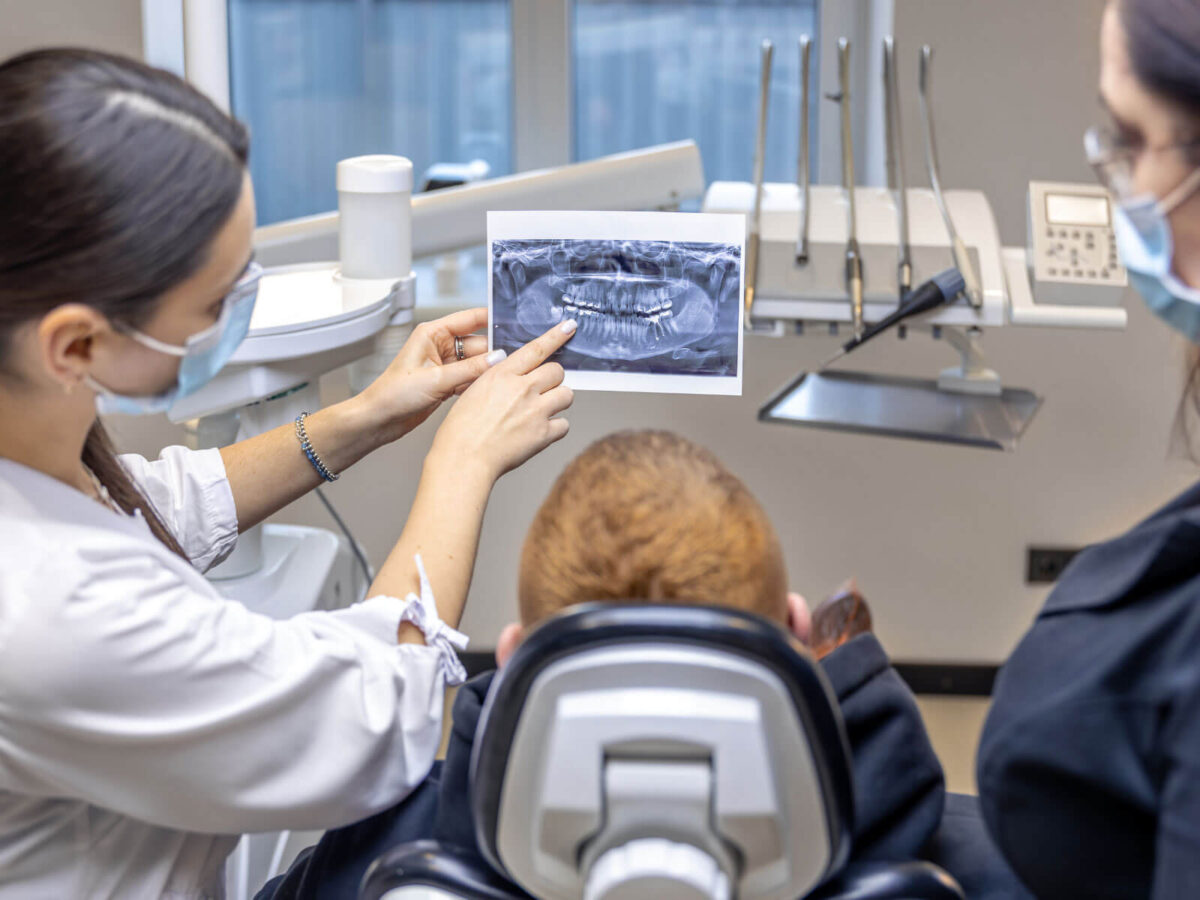
What Is a Panoramic Dental X-Ray?
X-rays are one of those things you don’t really think about until you’re the one standing there. It doesn’t cross your mind beforehand. Then suddenly your chin is resting on that small support, and someone reminds you not to move. The machine circles your head slowly. It feels a little unusual the first time, maybe even slightly awkward. But it’s quick. Before you’ve had much time to process it, it’s finished.
That wide image is known as a panoramic dental X-ray. It doesn’t seem complicated when it appears on the screen. Just a wide black-and-white image. Still, it carries more information than most people expect at first glance.
A panoramic X-ray teeth view doesn’t isolate a single tooth the way smaller X-rays do. Instead, it shows the entire mouth in one sweep.
It captures the upper and lower jaw, wisdom teeth that haven’t erupted yet, the jaw joints, and even regions near the sinuses. A dental panoramic X-ray isn’t about magnifying one small spot. It’s about seeing how everything sits together—the spacing, the angles, and the overall structure. Now and then, looking at everything together makes more sense than focusing on one spot.
In What Situations Is A Panoramic Dental X-Ray Done?
Not every appointment calls for one. If you’re going for a general visit or routine cleaning, then it’s not needed. But when your dentist needs a structural view, a dental panoramic X-ray becomes useful.
These are usually used in the case of wisdom teeth. You might not feel anything yet, but your dentist may want to see how those wisdom teeth are positioned under the surface. Are they angled toward the adjacent tooth? Are they sitting close to the nerve that runs through the lower jaw? A panoramic image answers those questions in one frame.
Orthodontic planning is another reason. If braces or aligners are needed to shift the teeth, doctors want to see the relationship between roots, bone, and jaw alignment. A panoramic X-ray teeth image gives that structural context.
The American Dental Association notes that radiographs help detect problems not visible during a clinical exam, including bone changes and impacted teeth. That’s the part many people overlook. What looks healthy on the surface can hide changes underneath.
What Does the Image Actually Show?
You may think that this scan just shows teeth, but it doesn’t stop there. A panoramic dental X-ray shows the whole upper and lower arches in just one image. You can see tooth roots extending into bone. You can see the temporomandibular joints near the ears. In younger patients, you can see permanent teeth forming before they erupt.
In case patients feel uncomfortable in their jaws, this wider view can help determine if there is any asymmetry or structural irregularities. If someone needs implants, it provides a look at bone height and shape before going for more detailed 3D scans.
Research available through the National Institutes of Health has highlighted panoramic radiographs as particularly valuable in assessing impacted teeth and jaw pathology. It’s not about replacing other X-rays. It’s about adding perspective. That perspective often changes treatment decisions.
Is It Safe?
Radiation is usually the first concern that comes up. The idea of a machine circling your head naturally makes people cautious. In reality, modern digital systems use low radiation levels in comparison. According to guidance from the U.S. Food and Drug Administration, the amount of radiation involved in dental X-rays is small, and modern systems are designed to keep exposure limited.
In simple terms, the exposure from a dental panoramic X-ray isn’t dramatic. It’s generally on par with the background radiation most people experience over a few normal days just going about life.
Dentists don’t take panoramic scans casually. They follow established guidelines to determine when imaging is appropriate. The goal is always diagnostic value without unnecessary exposure. You’ll only be asked to get one if there’s a real reason for it.
How Is It Different From Regular Dental X-Rays?
Normally, the X- rays we get are used for catching early cavities between teeth. They just show a small area, but much more closely.
A panoramic X-ray is a bit different. It takes in everything at once, so you won’t see tiny details like small cavities. What it does show clearly is how your teeth line up, the spacing, and the condition of the bone.
It’s like stepping back from a painting. You might lose some fine brushstrokes, but you gain understanding of the full composition. Both types of imaging have value. They simply answer different questions.
How Does It Feel Like?
The process itself is very simple and easy. You stay still for a few seconds while the machine moves around. That’s all.
There’s no pressure inside your mouth. There’s nothing uncomfortable to hold in place. When the scan is over, the image shows up right away. Many patients find it interesting to see their entire jaw displayed at once. It’s not something you normally get to view. And sometimes seeing it helps you understand your own dental situation more clearly.
Are There Limitations?
The simple answer is yes, and it helps to understand why. A panoramic image covers such a wide area that it isn’t designed to pick up tiny cavities or subtle enamel changes. It gives the bigger picture, not the fine detail. That’s why dentists usually pair it with other X-rays when needed.
If the discomfort is coming from one spot, they may zoom in with a separate image. A dental panoramic X-ray helps with overall orientation. Smaller X-rays handle the details.
FAQs
What are its uses?
It’s mostly used to see the full layout of your mouth. The jaw, bone levels, impacted teeth, and how everything is developing. It’s not really for spotting small cavities. It’s about the overall view.
Is it painful?
No. Nothing goes inside your mouth. The machine simply circles around your head for a few seconds. That’s it.
Can it show wisdom teeth clearly?
Yes, and that’s actually one of the reasons dentists rely on it. It shows how wisdom teeth are positioned, even before they come in.
How often do you need one?
That depends on your case. It’s not done routinely at every visit. It’s taken only when your dentist needs a more complete picture.
Is the radiation dangerous?
The amount used today is low, especially with digital imaging. When used responsibly, it’s considered safe.
Conclusion
You won’t need a panoramic dental X-ray every time you sit in the chair. For many people, regular exams and smaller images are enough. But when your dentist recommends one, it’s usually because they’re thinking ahead. They’re not just focused on a single tooth. They’re trying to see the full layout of your mouth. The way your jaw aligns. The condition of the supporting bone. Even your panoramic X-ray teeth positioning might affect future treatment. It gives context that a standard exam simply can’t provide. Some issues only make sense when you see the entire picture at once.
If a dental panoramic X-ray has been suggested, don’t hesitate to ask questions. It’s reasonable. Most explanations are simple and practical. The goal isn’t to add unnecessary steps. It’s to make informed decisions based on a complete view. That bigger picture can answer questions before they turn into issues. If you’re unsure about it, say that. Bring it up. A simple explanation from your dentist might be all you need to feel comfortable with the next step.

